Rabbi Amichai Lau-Lavie’s eye witness reflections on what happened in Union Square on the third annual Israelis for Peace Vigil for 10/7.
Once again, the screams of hate thundered over the nuanced pleas for peace. The scene in Union Square this week felt furious and historical, painful and fraught. And yet I still believe: There is more that unites us than divides us. Peace will prevail. It begins in the messy middle where redemption lives.
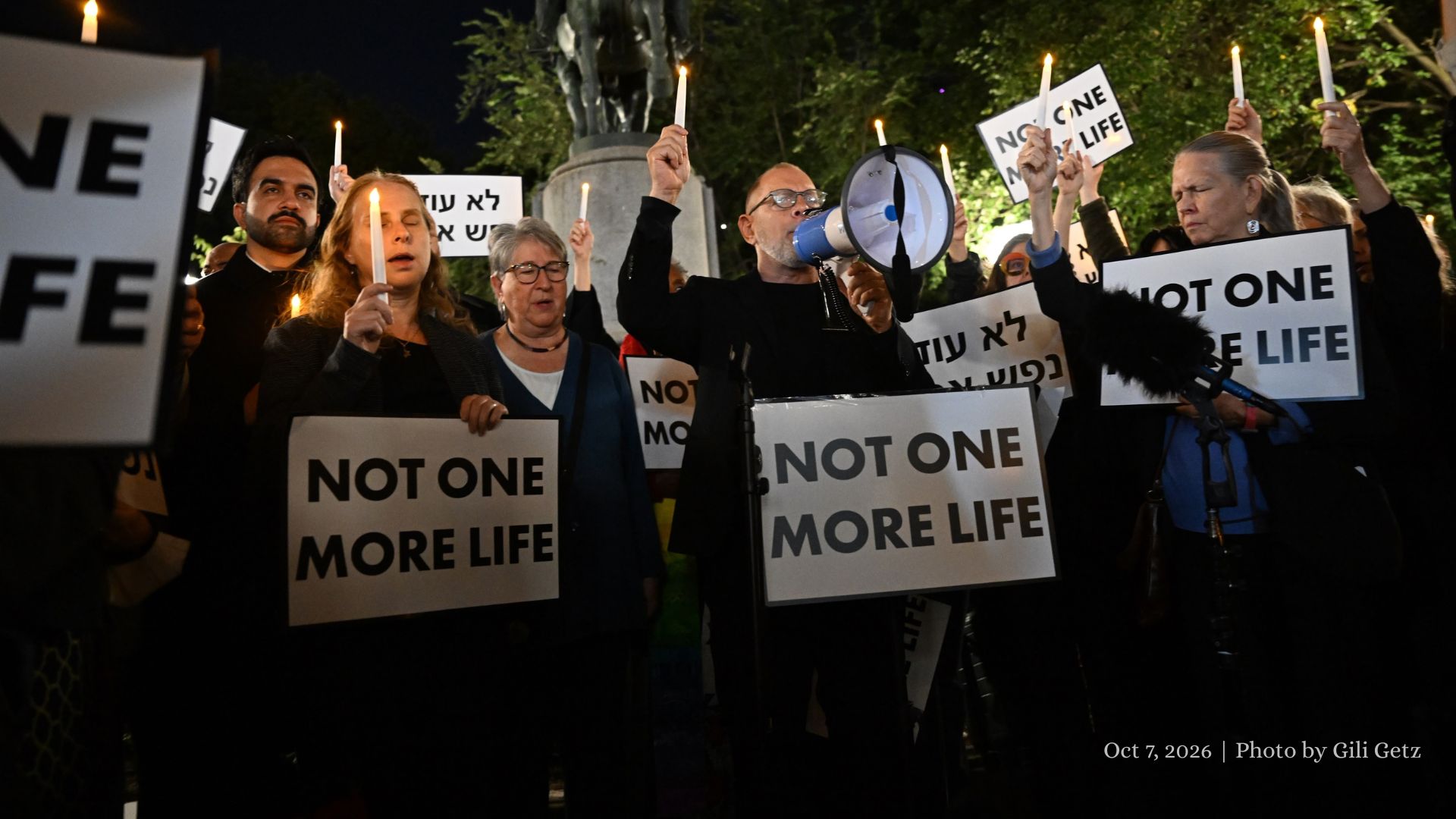
This is my eyewitness account and reflections on what happened in Union Square on the third annual vigil for 10/7 held by Israelis for Peace I was right in the middle of it, as an Israeli-American rabbi, proud to help plan, lead, and close this vigil—responding to the furious protests with a megaphone to recite the Mourner’s Kaddish and offer a prayer for peace for our people and all people.
I want to share a few facts, hurts, hopes, and the words of the revised prayer.
Along with hundreds of grieving Israelis and Palestinians, I stood hand in hand with invited faith leaders, alongside civic leaders including Mayor Mamdani, who chose to join us. We were surrounded by barricades against a hateful group of protesters, many masked, and kept safe by the NYPD.
The story got big and ugly because of the mayor’s attendance.
But the mayor is not the main issue here. Let’s not be distracted. Our peaceful vigil was attacked by antisemitic and antizionist violence with no respect for anything beyond their rage.
Mayor Mamdani may be part of the bigger problem here and can hopefully be part of the greater solution.
The real issue is in these divisive times, there are far too many hearts too hurting and angry to hold the multiple truths we must embrace if we want to move beyond zero-sum binaries of total truths. The refusal or tragic inability of so many of us, fueled by trauma, to see beyond pain and struggle to contain critical complexities is tragic. Even the best intentions for justice and protection, loyalty and love, from the left and the right, Pro and Anti alike, in squares and on screens, get stuck in the blame game that names what’s missing and who’s wrong yet fails to offer clear paths forward, to support the positive and fragile fusions that go beyond polarized positions to meet face to face with the futures of honest healing and relentless faith in peace.
Israelis for Peace
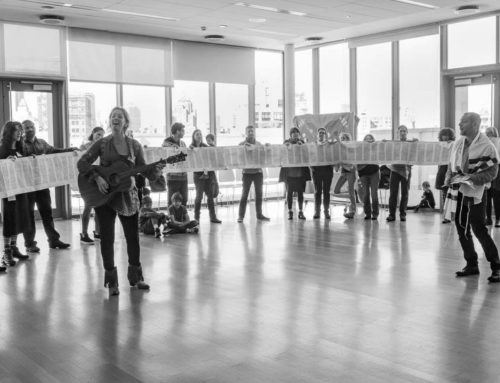
One of the very few circles and communities where I’ve found and felt the closest thing to a NY-based balanced reality that holds all hurts and hopes for our intertwined futures of peaceful living is this grassroots group that rose from the ashes of 10/7 to protest war and protect the visions of peace with and for all of us. For the past three terrible years, Israelis for Peace, created by a few fierce and impressive Israeli women living in NYC, has been committed to coexistence, an end to occupation, and co-creation of new pathways that honor all humans in the holy land. I had the honor of joining the first improvised vigil, still in Brooklyn, with handheld signs and candles in the weeks following the horrific massacre of Oct 7. There too we were surrounded by Pro-Palestinian protesters who waved Hamas flags. We found each other and raised our voices with songs and prayers. The vigil moved to Manhattan’s Union Square by the winter of 2023—with no flags, the sharing of harrowing testimonies from Israel and Gaza, and a focus on visions of repair. Every Sunday, rain or shine—part protest, part vigil—to stand in active solidarity with the suffering and futures of all sides. Leading voices for justice and peacemakers from the frontlines who refuse to choose sides and who believe that our futures are inextricably intertwined often join us to speak up and be embraced.
Even as tribal trauma runs deep and critics on both the far-right and far-left accuse us of betrayal, this circle keeps coming together, holding fast to the hope that our message will ripple out and grow to encompass everyone who prioritizes human life and dignity above all else.
While we have faced interruptions before, nothing was as loud or as aggressive as the assault on this year’s vigil. We are relieved and grateful that there were no casualties, no physical harm, and no arrests—thanks in large part to the NYPD, who did an outstanding job creating a barrier between our solemn gathering and a furious mob waving Hamas flags, displaying pictures of Sinwar, and screaming vile slurs at us and at the mayor. We stood there, holding candles and signs reading “Not One More Soul”, honoring the fallen while committing to visions of equality, justice and peace for all. I am in awe of the organizers who made a bold move and wise decision in the midst of this chaos—not to cancel, not to call on the police to initiate arrests, but to relocate behind barricades to model what messy looks like as we gathered to hold space for all of it: Israelis and Palestinians, people of all faiths, all ages, elected officials and religious leaders committed to dignity, democracy and moral courage.
The Mayor’s Presence
Why did the protest explode the way it did? Because Mayor Mamdani joined us.
Last year, before his election, Mamdani sat in the front row at our vigil, lit a candle, and listened quietly as heartbreaking testimonies of survivors, hostages, mourners, and bereaved families from both Israel and Gaza were read alongside poems and prayers.
While neither he nor any other officials were invited, we were honored to welcome him, along with other elected officials and hundreds of participants, even as his rhetoric angered many in the Jewish community, including some who stand with us.
This year, his surprising announcement that he would attend created a lightning-rod storm. Radicalized pro-Palestine protesters flooded the square to attack him for “treason,” sparing no insult for those of us who gathered to grieve. We again didn’t invite the mayor, yet were honored that he joined us alongside other elected officials including Brad Lander—who has stood with us on numerous occasions to speak up for justice—along with Jumaane Williams.
We didn’t invite the counter-protesters. Yet there we all were, responding in very different ways to the tragedy of that terrible day and all the terrible days since. Our anguished words were nearly drowned out by death threats that were deaf to the brave space we were holding. It was hard to hear the speakers, yet every word was heard.
We didn’t back down despite the slurs and the slogans, shouts and screams.
Earlier that day, the mayor had released a public statement regarding October 7th. I think it was flawed. He grieved the loss of Israeli life, but focused heavily on Israeli war crimes and American tax-payer complicity. For Israelis like me—even as a left-leaning peace activist sharply critical of Israel’s extremist government—and for so many still raw from the worst attack on Jewish lives since the Holocaust, his statement felt tone-deaf and insensitive. I wish his statement addressed both the Jewish trauma and the ongoing onslaught on Palestinians in a better-balanced way that builds bridges, not erects more walls. I hope he will be better advised in the future and commit to support this course as needed.
I have come to know the mayor, appreciate him, and many of his positions and his willingness to grow and learn, to hold complex views, especially on this issue. While I firmly believe he is not antisemitic, his anti-Israel and anti-Zionist rhetoric frequently blurs dangerous lines. We have to learn to work together towards the greater good even through deep debates.
And yet, while words matter, it matters when leaders walk the talk. Mayor Mamdani made the courageous choice to show up in a space that honors humanity and complexity, knowing he would be attacked from all sides. He stood with us, unsmiling, for 90 minutes as harrowing testimonies of those who perished on October 7th and in Gaza were read aloud over the roar of the crowd that surrounded us, ignoring our words, hurling insults at us and at him.
I watched him as masked pro-Palestinian extremists cursed him as a sellout, while pro-Israel protesters shouted at him from the other side. When the chant “Globalize the Intifada” echoed across the square—a slogan he once used, but has since walked away from—I wondered what was going through his mind. I hope standing in that fire shifted something inside him, stretched beyond furious convictions towards realizations of what toxic words can unleash. Like all of us, I hope that he too will keep evolving, unlearn old narratives no longer serving the big picture, towards a brave new paradigm shift that paves paths for all forms of coexistence and equity.
At one point during the vigil our eyes met and we nodded in recognition, both of us in tears.
In an article published by the Jewish Telegraphic Agency (JTA) covering the night, I shared my perspective: Rabbi Amichai Lau-Lavie, who leads New York’s Lab/Shul and led the Mourner’s Kaddish, told JTA that “In the heat of these protest battles, there’s no room for nuance. It’s the slurs and the slogans. And what we saw here tonight was hatred that is coming from a good place of justice and freedom, but is not attuned to what we’re doing here.” He described that goal as one that acknowledges that both peoples’ futures are intertwined. Lau-Lavie also praised the mayor for coming. “I can say I’m glad about the fact that the mayor was here and witnessed this animosity, and stood with us,” he noted. “For all his flaws, and there are many, I hope he got something.”
But the main message of this vigil was not his presence—it was our collective call for grief and growth, not for callous revenge but for courageous repair.
Our Path Forward
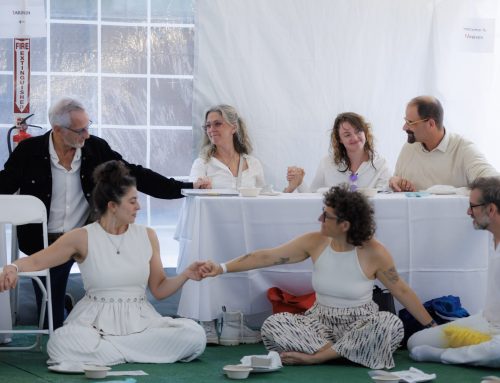
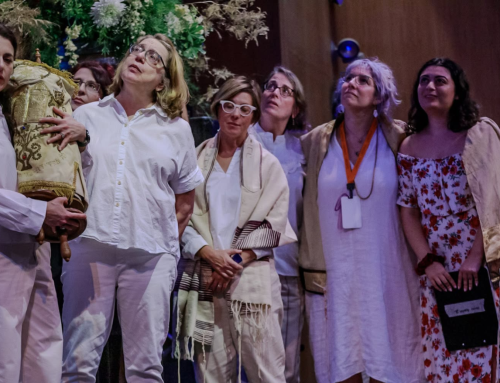
My primary task at this vigil was organizing our interfaith alliance. A few dozen faith leaders—Muslim, Christian, and Jewish—stood arm in arm. Rev. Jackie literally held my trembling hand as the screaming intensified. Imam Ahmad tried to reason with the protesters and was shoved aside. And yet, we delivered our prayers above the din to close the vigil.
I invited us to raise our candles high, and hold a silent pause, louder than megaphones of hate, even as the crowd around us jeered. We were called to pray for and imagine a lasting peace—to transcend tribal trauma and deep suspicion to build a shared future forged through fears and tears.
Amended Peace Prayer
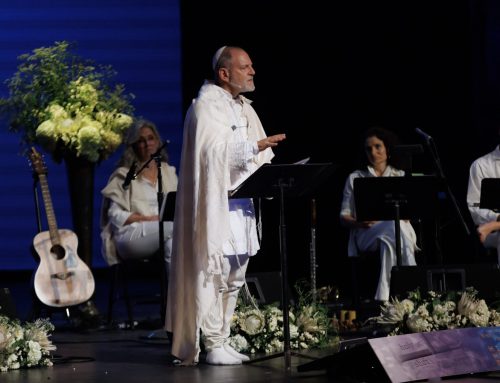
To conclude, I led us in the Mourner’s Kaddish for our people and for all human beings, ending with an impassioned plea for peace. I offered two changes to the hallowed prayer—one, already known to many, prayed for the peace of the people of Israel alongside all those who dwell on earth. The other shift is one I offered my community this past Yom Kippur—calling on the Source of Life to help us all become partners in peace, not wait for miracles—as we take on the most urgent task of our lifetime. Oseh Shalom B’mromav – Bo’u Naashe Shalom: Let’s all dream this peace together. It was a powerful and moving ending to this sad affair: We all lifted up our candles and raised our voices with each word to hold each loss of life and focus on the future we all yearn for.
When the vigil ended, we shook hands and hugged, and wept. As the crowd dispersed, a few of us faith leaders formed a tight circle in the middle of the square to hold each other, and pray for the patience, resilience, and perseverance required to keep building trust and peace bit by bit. I cherish those moments of grace. But I am also left with deep pain from the violence we encountered and the responses since.
While the protesters who called us “Nazis” insulted our fallen and our dignity, the dismissive remarks online from some Jewish leaders and fellow rabbis—one of them who mocked us in quotes as “peace protesters” who allowed hate to echo alongside Hamas flags—hurt far more.
Outrage was expressed toward the mayor and the protesters, but not a single word of support was offered to the Israeli activists, fellow rabbis, faith leaders, and Jewish community members who actually stood in the square holding space for Jewish grief and human hope. That’s also what happens when hurt becomes hate. I have spent many days in the West Bank encountering the dangerous violence of Jewish terror—extremist settlers, most often as young as the protesters at Union Square, equally ignorant of what a real solution to injustice can look like. Whether it’s a teenage settler on Palestinian soil with a kippah and a mask, club in hand, defending Jewish supremacy, or a masked, Hamas-flag-wearing teen in Union Square, I’ve seen the eyes of hate-fueled ignorance and it can’t be ignored. We must work hard to educate for empathy, for tolerance, for new ways out of this mess, and it will take a generation or more. It’s not too late to stop the hate.
Extremists on either side, no matter how loud or self-righteous, will not drown out decency, silence our prayers, or prevent the plans for long-lasting peace, no matter how far it seems right now and how impossible. We owe this to our ancestors and we own this to our descendants.
This coming Shabbat, in synagogues worldwide, we will begin again the annual cycle of sacred story—chanting the words of Genesis. We will be reminded that we were all created in the divine image. We will once again hear the spilled blood of Abel calling us from the earth, and respond to this first murder by adapting his brother’s question—yes, we are all our siblings’ keepers, and always will be.
Our Jewish ethics and moral humanity chart our path onwards.
Loud-mouthed zealots will not destroy the complex, necessary, messy road of reconciliation—a path to peace built on repair and reparations, humility and honest work for equal rights, safety, and dignity for both peoples in the Holy Land and all people on this planet.
To my fellow Jews who are skeptical, hurting, or unsure of how to navigate this moment: we must learn to handle nuance and imperfect allies. Look for the helpers who refuse extreme binaries. Reject those who demand total ideological purity at the expense of human complexity. The same goes for our Palestinian partners towards progress, justice, pride, and peace. I’m so grateful to know so many, on both sides, and all sides, who co-create these circles and communities that see beyond the past and hurt to reimagine better.
To our mayor, local leaders, and all who strive to be there for all of us in solidarity and with wisdom—thank you for showing up with courage and compassion. let’s all learn to balance it all better and lift up love with and for all, for the sake of union in Union Square, all over this city, nation, and world.
It is messy in the middle. But I wouldn’t be anywhere else. Our road to redemption will rise from this moral ground of commitment to complexity, courage, and change.
Read the full JTA article here.
~ Rabbi Amichai Lau-Lavie