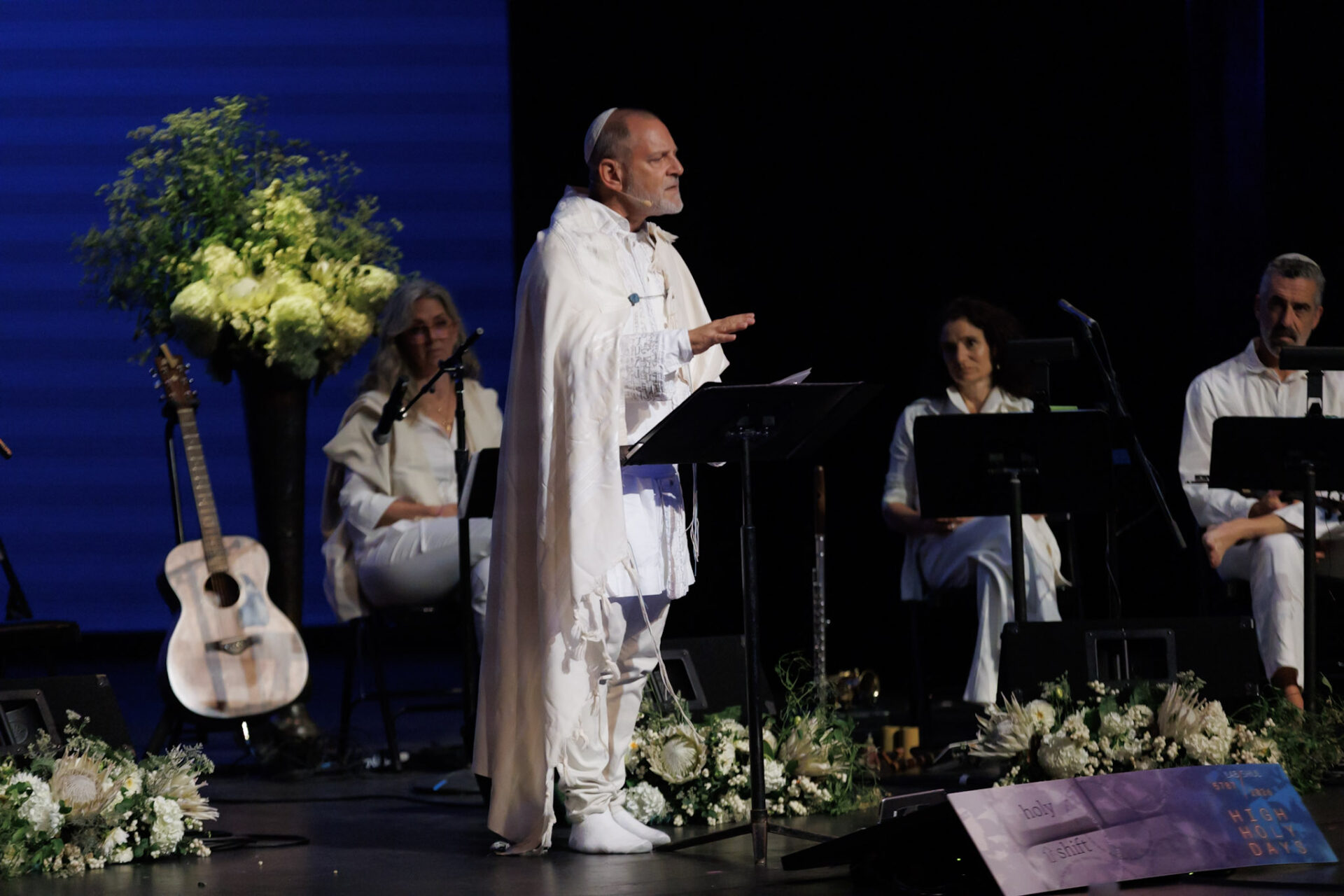
Lab/Shul High Holy Days 5787 / 2026
Through Thick and Thin: Better Balance our Ethics and Morals
Yom Kippur Eve 5787 / 2026
Rabbi Amichai Lau-Lavie
The Angel of Death walks into a synagogue on the day before Yom Kippur. The rabbi is practicing the sermon, and one of the congregants is organizing seats. The Angel of Death says, “I’m sorry, friends, but time is up. You do, however, get one final wish.”To which the rabbi responds, “I’ve written such a great sermon—let me deliver it one last time.”And the congregant says, “Please kill me first.”
The original joke was a little different. When I prepared for tonight, as I do each year—talking with rabbinic colleagues around the world about what’s on our minds —I was on a call with Rabbi Delphine Horvilleur, a dear friend and prominent Reform rabbi in Paris. Delphine, who, like me, will be stepping down from full leadership in the coming year, mentioned this joke that she used 18 years ago to open her very first Yom Kippur sermon—except instead of the Angel of Death, it was a terrorist who walked into the synagogue.
We both agreed that 18 years ago, that was a questionable choice. Today, it is unthinkable.
So much has shifted. So much is shifting.
We are all deeply aware of the heightened insecurity—the tensions and shifts forcing us to be far more cautious of terror, anti-Semitism, Islamophobia, hate speech, hate. Too many synagogues, including ours, have extra security tonight.
It is impossible to joke about these pains
even as humor helps us hold both horror and hope.
We are not here tonight to joke.
We are here on the holiest night of our year to reflect, commit to change, examine the shifts we are living through and how we can better handle what’s coming our way.
Because shift happens.
How do we move from facing change wisely – not just as a shift but as a holy shift?
How do we approach life’s inevitable changes, small and big shifts, in helpful ways that honors our highest and holiest sense of humanity, guided by our oldest Jewish wisdom, giving us the tools we need to survive and thrive in a fast shifting world?
What are the gifts of all these shifts, some of which we choose and some that we don’t?
Our team at Lab/Shul chose “Holy Shift” to name this time of paradigm shifts in the world, in the Jewish community, in our own Lab/Shul community, and in our personal lives.
We began with our words. The building blocks of our reality.
Words matter—in the Jewish tradition it’s how the world gets made. With words we build better worlds.
Tomorrow we will end WordWatch: 40 words in 40 days in your inbox – our Prepent tradition.
We explored exiled concepts, words that weigh heavy on our hearts, and words we must reconsider as we enter this year of shifts. The word gratitude belongs here: Thank you to every writer who contributed to this project, the artistry, management of this project by our tireless team – and thank you to each reader.
As Amos Oz and his daughter, Fania Oz-Salzberger, remind us in Jews and Words:
“Jewish continuity was always paved with words.”
We focused on loaded words that mold and mirror our current civic rupture and political toxicity: Friend, Free, Zionism, Nakba, Complicit, Monsters, Truth.
There were many words we left off because this platform wasn’t the ideal place for their raw complexity.
We didn’t write about God, Genocide, or Terrorism. We didn’t directly address Climate, AI, Queer, or ICE. We didn’t mention Messiah.
Yet two vital words didn’t make the final list, and I bring them tonight because they are critical to facing reality in every holy shift ahead:
Ethics and Morals.
We often conflate them, and often confuse these critical concepts.
Ask yourself on this Night of Atonement:
How ethical is my life? 1-10?
What are my morals?
Are those two different lists?
Do we feel good about our ethical choices? Where is our moral sense of being in the world?
As individuals. As a nation?
We are here on Yom Kippur to ask these questions even though we don’t always name them that way.
At best our ethical and moral intentions align.
But what happens when our priorities, values and choices collide?
You can live an ethical life and yet be immoral.
You can focus on morality—and lose basic ethics.
As our world and the worldwide Jewish community face an existential and moral crisis, we must focus on these words as action steps to clearly chart our path forward, better align our ethical and moral horizons.
Let’s start with British philosopher Mary Midgley:
“Ethics is… like plumbing. It lies beneath the surface of our lives, quiet and invisible until something breaks, revealing the massive structural framework that keeps our shared world running.”
My friend and Lab/Shul co-founder John-Adam Ross shared a story about riding the subway. Everyone is wearing headphones, minding their own business, avoiding eye contact—classic New York ethics. Suddenly, a noise in the corner escalates from a shout to an altercation. Eyes meet. Somebody stands up, then another.
We move from the ethics of minding our own business to the moral responsibility of stopping someone from getting hurt.
Ethics comes from the Greek ethos—custom, character, or the shared values of a specific place. It is about how we treat each other in a local context: the unwritten plumbing of a particular tribe, nation, subway car, or synagogue. Ethical conduct governs our obligations to those inside our circle whose survival is linked to our own. It is the pragmatic, protective instinct of the clan—sometimes at the expense of others.
Morality, from the Latin moralis, describes universal obligations owed to every single living being simply by virtue of our shared humanity. Morality doesn’t care about your passport, parish, political party, or tribal lineage. It demands that we treat suffering on the other side of the world with an equal claim on our conscience.
According to one philosophical approach: Ethics is local. Morals are global.
Israeli philosopher Avishai Margalit is one of the leading voices of this approach, and he wrote this in The Ethics of Memory:
“Ethics is about our thick relations to those who matter to us; morality is about our thin relations to humanity at large.”
Thick and thin. Jews, Israelis, New Yorkers, Americans. In a globalized world, there is a lot of thin, creating a major challenge to the thick. Through thick and thin, we must navigate our ancestral legacies alongside a global vision for a safer, more just world.
What happens when preserving our thick and beloved ethical culture becomes an ethno-national project of supremacy? When ethical becomes immoral?
Consider this tension in recent news:
In early 2025, Vice President JD Vance defended “America First” policies and ICE enforcement by quoting Christian doctrine on loving your neighbor. Never mind for the moment what it means for Christian beliefs to publicly be cited as American policy. The use of this religious terminology caused an uproar, and on the following day, Vance posted on X:
Just google ‘ordo amoris’. The idea that there isn’t a hierarchy of obligations violates basic common sense. Does anyone really think their moral duties to their own children are the same as their duties to a stranger who lives thousands of miles away?”
Many did think otherwise. Among them the late Pope Francis who challenged Vance’s argument directly in a public letter to US bishops, explaining the Catholic concept of Ordo Amoris – The Order of Love:
“Christian love is not a concentric expansion of interests that little by little extend to other persons and groups. The true ordo amoris that must be promoted is that which we discover by meditating on the love that builds a fraternity open to all, without exception.”
This debate between these two senior Catholics in the world comes from and reaches to the heart of the Leviticus Golden Rule: Love your neighbor, love the stranger. Vance used local ethics to say: “My primary loyalties are here.” The Pope answered with universal morality: “Our morality demands care for everyone, without exception.”
Both approaches bring truth, but what happens when our local ethics obstruct concern for others? Or when abstract morality discards local loyalty? How do we learn to navigate between the thick and thin?
American-Jewish Philosopher Martha Nussbaum warned against Vance’s limited translation of the biblical ‘neighbor’, and also cautioned against the dangers in the binary model that Margalit suggests:
“To accord priority to one’s own nation or group as a matter of ultimate value is to treat the accident of birth as a fundamental moral category.”
When we prioritize the thickness of our own group over the thinness of others, we slide into supremacy. That is the crisis facing America—and the existential moral crisis in Israel and the Jewish world.
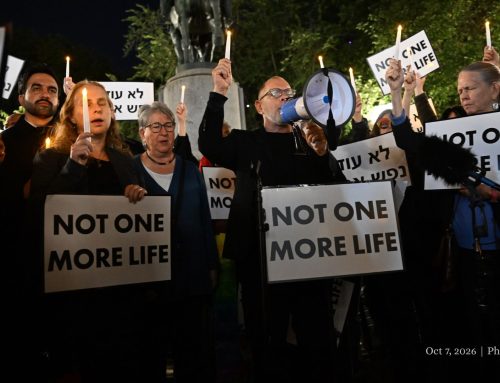
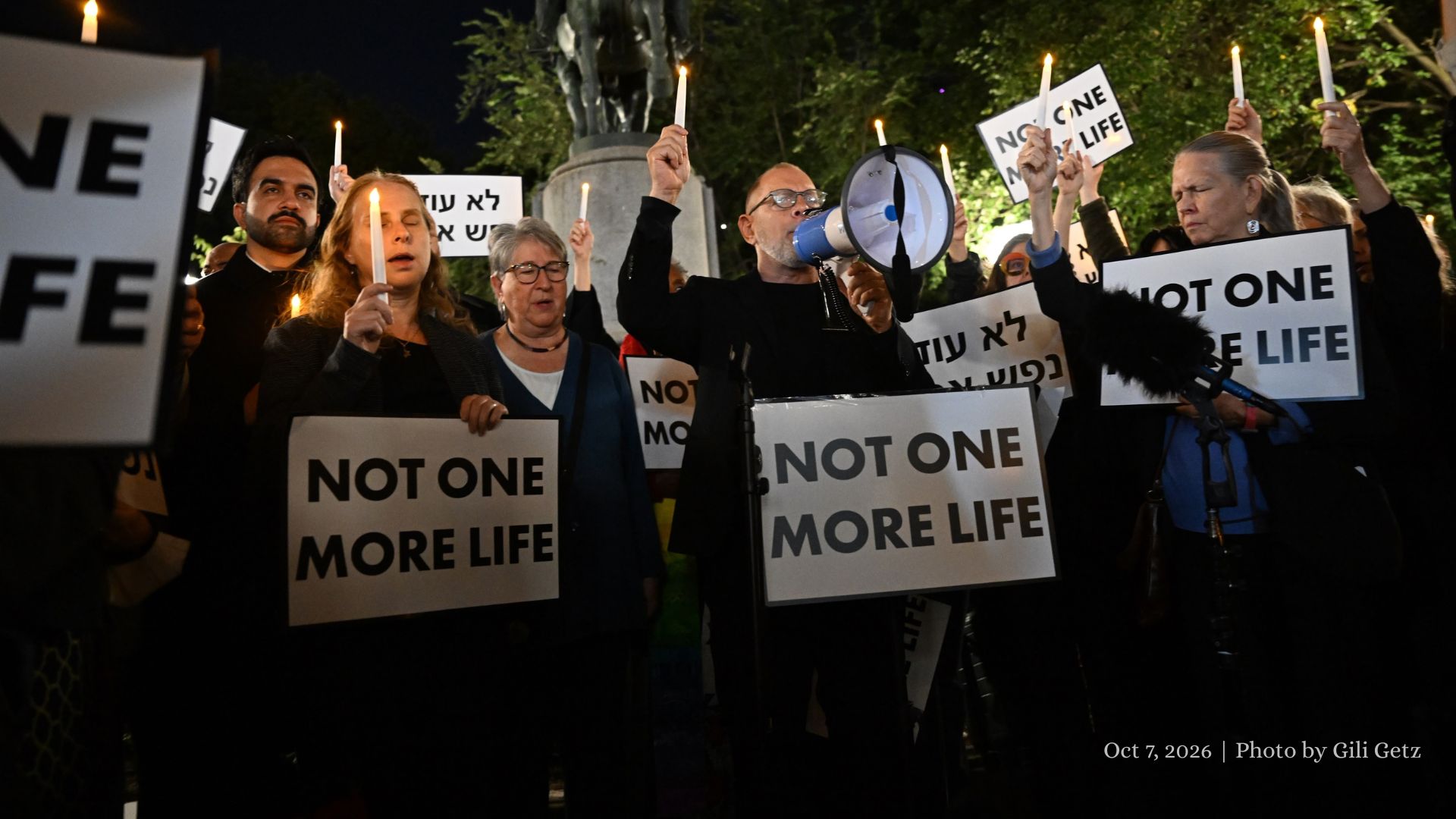
As many of you know, I’ve been spending a lot of time in Jerusalem this past year. Partially to be with my mother who is celebrating her 97th birthday tonight. And mostly in the West Bank serving in protective presence with Rabbis for Human Rights and partner organizations—standing in solidarity with Palestinian farmers and homeowners to interrupt daily attacks by violent Jewish settlers whose stated agenda is terror leading to ethnic cleansing. Protective presence simply means being there: taking shifts to interrupt violence, stand in solidarity, document injustice, and say not in our name.
On a hot summer day in the village of Qusra—a community repeatedly terrorized, its homes torched, its mosque burned—I came face-to-face with young settlers storming down the hill with clubs in hand. Side-curls flying, tzitzit dangling, furious. Looking into their eyes, I knew at least one could easily be a cousin. Like so many raised in Religious Zionism, my own family has been torn apart by radicalizing visions of our sacred purpose on this land, on this earth.
This one was masked. Eye to eye, I asked: “What are you doing here? This is private Palestinian land.”
He removed the bandana to spit at me and yelled: “This land belongs only to Jews. You traitor.”
Make no mistake: this kid—and the rabbis who teach him,
the ministers who arm him,
the government and army that protects him,
and the public that approves this vile supremacy or turns a blind eye out of moral laziness—is operating from within a fierce, insular ethical script. A religious Jewish script.
This is an ethic of protection turned aggression — forged in historical trauma:
Jews First. Protect the land, legacy and people.
Never Again. Survival at all costs.
Ethno-National ethics, born of trauma, moral blindspot.
For millions of Israelis and Jews, this insularity is driven by profound, agonizing traumas that go back generations, with more recent reminders of our fragility.
Three years after the unspeakable horrors and massacres of October 7th, the wounds remain raw and unhealed.
Yet when that trauma hardens into fanatical faith based fury that calls for lawless revenge, local ethical self-preservation completely divorces itself from universal morality and from Jewish moral codes.
An ethics-only attitude looks away from the devastating death toll and hunger in Gaza, ignores state-sanctioned violence and land grabs in the West Bank, treats war crimes as an acceptable price for survival, and brands all criticism as hatred. Ethics- only Extremist Judaism erases the diversity of democracy, the many faces and faiths that make the holy land the homeland of many different ways of being Jewish, Muslim, Chrisitan, Human.
Family first is good, and ethical. Family Only is immoral and is bad for all.
The worst government in Israeli history has unleashed demons of dread, turning trauma into terror.
Upcoming elections may hopefully begin to shift and heal the hardening of hearts.
Yet this moral collapse is not happening in a vacuum, nor is it unique to one side.
There is no symmetry, and there is a power imbalance.
And yet. For a century, both Israelis and Palestinians have been trapped in cycles of despair and dehumanization, claiming innocent civilians as legitimate targets in the fight of both people for safety and for liberation.
On the other side of the spectrum from Am Yisrael Chai that ignores the human rights of Palestinians, calls of “From the River to the Sea” might commit ethical betrayal by minimizing or denying valid, visceral Jewish need for safety, sovereignty, and a national home. Voices in streets, stadiums, and schools justly demand moral empathy for Palestinians but often erasing the existential terror and right to self-determination of the Jewish people.
When we prioritize local ethics without universal morality, we get Hamas, settler violence, we get state oppression. We get War.
When we prioritize global morality while discarding local ethics, we abandon our own family, our people’s legitimate need to survive.
This binary trap between Pro and Anti is destroying us. It manifests on our streets, in city halls, on college campuses, and in our sanctuaries—where saying “I love Israel” is taken to mean only Israel, and shouting “Free Palestine” is taken to mean the erasure of Jews.
True Jewish wisdom refuses to choose between self-preservation and universal justice. Our local ethical devotion to our family, our people, and our homeland must be rooted in a universal moral commitment to collective liberation, to the sacred dignity of every human life.
That is what it means to go through thick and thin—to hold these loves and loyalties together. Our futures on this holy land and holy earth are intertwined.
This is a holy shift of attitude. A shift we must lift up and commit to.
This is not just a crisis of identities, and political outcomes. This is also a theological crisis.
During that visit to Qusra, I hand the privilege of painting the charred and damaged metal doors of the local mosque, together with Sheikh Hasan, a Palesinian-Bedouin religious leader, and Professor David Myers from UCLA, a veteran peace activist, who later wrote about that day and this reality:
“This theological-political problem requires a theological-political remedy: a Jewish liberation theology that frees others and self at once.”
Myers call for a revised Jewish liberation theology reminded me of a concept from our core tradition, the Mishna, that must be retrieved and reimagined:
No Torah. No Derech Eretz. No Derech Eretz. No Torah.
Without Judaism, No Common Good. Without Common Good, No Judaism.
An ancient recipe for balancing both Ethics AND Morals.
Torah is our Jewish ethics, our core story. Derech Eretz is the common good, culture, and civilized behavior. The Mishnah insists: not one without the other.
Not only must our local ethics and global morals balance.
Our Sages teach that morality must be our top priority. : Derech Eretz kadma l’Torah—universal morality precedes Jewish ethics.
We have lost this wisdom in our obsession with survivalism.
Survivalism is the product of scarcity – the fear that there is not enough land, not enough love, not enough room around the table for all of us.
And while water and other resources in the world are fast shifting as part of the climate crisis – we know better than to let scarcity and fear lead the way in how we respond to rupture – not from greed and not with theft and violence, but with moral capacity, compassion and decency. Morality must guide our way or we will slide into more of the barbaric behaviour we are witnessing in the West Bank today.
Morality first is a Jewish virtue. Derech Eretz that comes with Torah and often precedes it must be reclaimed as our mantra.
Rabbi Abraham Isaac Kook, the first Chief Rabbi of pre-state Palestine, whose legacy evolved into a few strands, including the foundation of today’s far-right messianic ideology, firmly believed that morality must be the baseline:
“‘Derech Eretz preceded the Torah.’ This precedence is a permanent necessity for all generations. Morality in all the depth of its majesty and its steadfast strength must be rooted in the soul, serving as the bedrock for the power of the Torah…”
What would he say today?
Morality first. Humanity face-to-face with all life must be our North Star.
It’s on us.
For Israelis who are wounded and struggling to survive amid a dangerous turn to the religious right – morality must come first, and Judaism must embrace both the Torah of justice that loves the neighbor and stranger alongside the moral imperative to see beyond the borders of battles, and love beyond one’s walls. This progressive and liberal path of pluralistic, inclusive, justice driven and love based Judaism needs a lot of support and strength to become a major voice in the Israeli chorus. That’s part of what I am drawn to be back there – to bring what we’ve created here over the past many years to the land where I was born and where there is deep thirst for this kind of creative and embracing Jewish life.
And as for us here, friends – American Jewish liberals, in the middle of this crisis, we have a particularly important role to play here, in the middle of this shift.
We have a duty, a role, a massive responsibility to hold both ethical Torah and universal Morality together. As Americans and as Liberal Jews – we are proud partners in the American Jewish tradition of fighting for human rights, civic equity and dignity. We must keep fighting for this justice right here at home, and keep holding them for the people of Israel who want to see a better brighter day.
We can and must champion these Jewish values that hold both our Torah and our moral claims to the multiple and different ways in which we love and support the Israeli people fighting for peace while also criticizing the authoritarian supremacy that has taken hold of our community.
For centuries, Diaspora Jews have cultivated systems for better balance between insular ethical lives and public moral existence. Living both/and – embracing both our specific ethical norms and living as equal citizens in the wide world.
As contemporary diaspora Jews we have the ability to see and hold onto the broader moral vision of what Rabbi Kook and the pope wrote about.
We need to uphold this ethical-moral vision, to see the bigger picture when those caught inside trauma cannot, yet.
That’s what it means to hold both thick AND thin, together.
The beating heart of Jewish wisdom and life, the golden rule, that a vice president and pope debated, among countless others, brings us back into the beating heart of our story, our core command, our biggest challenge:
How far can we stretch the limits of our love? How elastic is our empathy as it manages our global morality. Beyond scarcity – I believe we can be elastic enough to stretch far and break our bonds.
This too is a core concept of our Torah.
You may remember an earlier sermon of mine on this holy night, in which I talked about the fact that the Torah does not say LOVE YOUR NEIGHBOR. It says AND LOVE —
There is a VAV there. That Vav is a Hebrew letter that is the hook that includes both ethics and morals. It calls on us not just to love the other but to love harder. That’s the Vav.
Expanding our Empathy. We need this And. All you need is Vav.
I’m halfway done with this book – stay tuned for 2027.
How will we balance our local ethics and global morals? Love our people, learn how to criticize with love, as one learns with one’s family, and keep our eyes on the prize of our universal, global morality?
That’s the shift we must be part of in a fast shifting world. That’s our elastic Vav.
Our brave wise way of holding more than one truth together.
I leave you with this question for this night of reflection and atonement?
How will we better balance our local ethics and global morals?
Tomorrow afternoon at Ne’ilah, during our closing sunset ritual, I will offer a response – a suggestion for the ways we can combine and find the path for both our ethics and morals.
I will also share a few personal reflections on my own path ahead and our community’s leadership transitions and shifts. I don’t always speak at Neila, yet it is a liminal tender moment, a threshold in time, with Lab/Shul history relevant to this shift.
It is on us to walk the talk of holy shift. We may not avoid the Angel of Death, but we can decide how to make each moment matter and each life precious.
I close with poet Alicia Ostriker:
“We must break open the words that have been locked in ideological safes, breathing life into them until they can hold our grief, our rage, and our stubborn hope once more.”
Word by word, through thick and thin, may we weave our ethical empathy and moral imagination toward the greater good.
To all of us, Gmar Chatima and Shana Tova.