Dear Lab/Shul,
How can we dance when our hearts are hurt and broken? Despite war, despair, and sorrow – can we still rejoice? Sometimes, my wise mother Joan says, the only response to life’s struggles is to dance.
On this day, April 22nd, the world marks Earth Day. On the Jewish calendar, this is the same day Israel marks its independence. And as it so happens – once every 19 years – I too am celebrating another year around the sun today on both calendars. There is much to be grateful for. I am grateful to mother earth for life — to my mother for her labor pains, her endless love, and for the gift of life among so many blessings.
And yet, in a world torn by turmoil, how do I – how do we – try to follow my mother’s advice and dance?
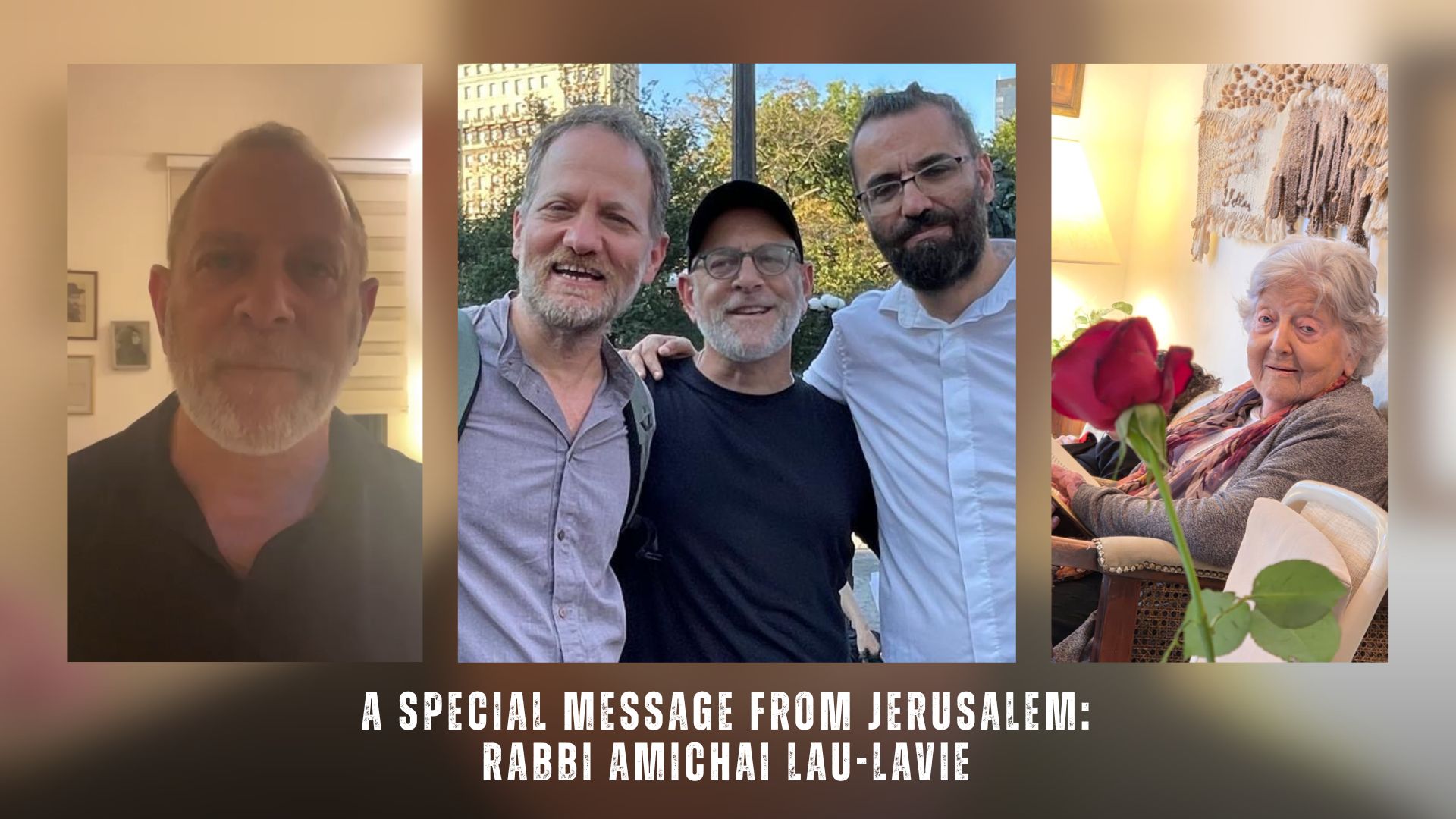
I ask this question today from Jerusalem, where I’ve decided to stay longer than planned to help care for my mother, who recently fell and is quite frail. It is a privilege to be here with her, and I have delayed my return to support her and my family as much as possible. I am deeply grateful to the Lab/Shul team for helping me prioritize her needs at this time, and I hope to be back with you very soon.
Each day as I sit with her, she shares stories we’ve already heard, but also some surprising new reflections. I’ve been keeping a daily journal that I invite you to follow along with, if you are curious:
Today, I want to share one of her pearls of wisdom—a reflection on the ways we can rise above our private and public pain to hold each other’s hand, pick up our feet, and dance. It feels like an appropriate story for a week in which we hold so many conflicting narratives together: mourning and hope, sorrow and celebration, an interdependence leading us toward better times—even if we are not there yet.
In 1951, at 22 years old, my mother left London and emigrated to Israel. She was an idealistic social worker, a humanist, and a Zionist who wanted to be part of building a new nation and helping heal its raw wounds. She had a few cousins here, knew a bit of Hebrew, and struggled to make this hardened holy land her home. The other day, she spoke about the “survival of arrival”—how hard it was to acclimate to this place, with all its layers and wonders, struggles and secrets, and how the homeland eventually became her home, too.
She has been reminiscing lately on those early days, recalling not just how hard it was, but how she felt like she was part of history. Her story helped me grasp how we can sometimes dance even with grief, even mid-war, and how our human will can rise above our pain to be part of a much bigger picture, even if we cannot see it yet.
She described a festive spring night in Jerusalem, dancing in circles in one of the main squares with other excited young people. As she described the details—fuzzy on the facts—we figured it was just three months after her arrival: Independence Day in a city still dealing with war and battle scars. But she was dancing. She talked about the awe of that moment:
“We were aware, together, that we are dancing in the presence of a new history. Living in a time like this requires dancing. You can’t just sit there and clap your hands. You just have to dance.”
I heard her and thought of what she didn’t know, or chose to look away from, at the time—the price that Palestinians were paying in the aftermath of 1948; the empty homes in Jerusalem where they once lived; the echoes of the Holocaust; the wounds still too fresh to heal. A nation born out of blood, sweat, and tears. And dancing?
My mother’s words reminded me of a verse from Psalm 30, thanking the Divine for helping us transform our spirits:
“הָפַכְתָּ מִסְפְּדִי לְמָחוֹל לִי” “With divine love my mourning turned into dancing.”
Can our mourning over so many shattered dreams and lives morph into a hopeful dance?
74 years later, my mother is 96, Israel is 78, and though neither are doing too great, both are hanging in there with a lot of pride, a lot of pain, and a lot of hope for the future—in very different ways. Today, Israel marks its independence. Flags are out, but the mood is heavy. Israelis are resilient but tired. After the most recent collision with Iran, more than two years of ongoing war, nonstop protests, escalation in the West Bank, and deepening divides between us, this week is welcomed with mixed feelings.
Like many of my friends, both Israeli and Palestinian, I mark this week with a heavy heart and the conviction that the only way beyond this binary bind is to work for change—to replace a government of supremacist greed and reimagine a shared future where all of us celebrate our freedom, sovereignty, and pride. This is the history it is on us to dream into action and to birth, however long it takes. We are not the first generation to feel the rush of history beneath our wings. My mother’s memories help us remember how we got here, paving the path for better days.
This week, as we switch from honoring the victims of so many wars and acts of terror on all sides, to celebrating Israeli independence—with fresh losses, ongoing war, and deepening divides—the grief lands with ease. But how the hell do we get up to dance?
My mother can’t really dance right now. She moves her hands when we sing and sways her hips a bit when we play a Shirley Bassey hit from 1956 that she used to dance to with my father. But she reminds us that dancing happens in many ways—that history is made of these small circles that keep expanding and becoming reality, sometimes bitter, sometimes better, hand in hand, circle by circle.
Don’t just sit there—get up and dance.
Trauma freezes the body in a state of hyper-vigilance. Collective trauma creates societies stuck in the pain of the past. Turning mourning into dance is a literal somatic release. It’s what we must do to repair, to break away from old forms, and forge a brand-new path. The future that my mother will not live to see, and hopefully many of us will, is a brave and bold and bigger circle dance—for all of us who call this land home—together.
I’m not the only visionary dreaming of this brave new dance. This past week, THE FUTURE IS PEACE, the much-anticipated book by my friends Aziz Abu Sarah and Maoz Inon, was launched. Lab/Shul friends may remember their incredible talk with us on Yom Kippur two years ago. These two friends, a Palestinian and an Israeli who both lost loved ones to this conflict, believe that there is no other way forward but a shared dance. Their book imagines the future we all yearn for:
“If it can happen here, it can happen anywhere. If it can happen one day, it can happen today. We grieved our losses and made the choice to forgive, releasing ourselves from the prison of our collective trauma. We have shown the world that we can live without walls of division, that conflict does not inevitably lead to violence, and that security comes from community. We talk of making, of working toward, of building peace, because peace is a constructive effort, something that must be created, person by person, word by word, deed by deed. Peace is not an ecstatic state, but a reality that must be nurtured and safeguarded every day, and the day after that.”
Dream by dream. Dance by dance.
Just before he flew to the US for this book tour, Maoz and I met for coffee and talked about our moms. On his wall hangs the mandala I gave him after their Yom Kippur visit—created by his mother, a victim of October 7th, an artist who drew the words that are the core of Maoz’s activism: “We can achieve all our dreams if we’ll be brave enough to chase them.”
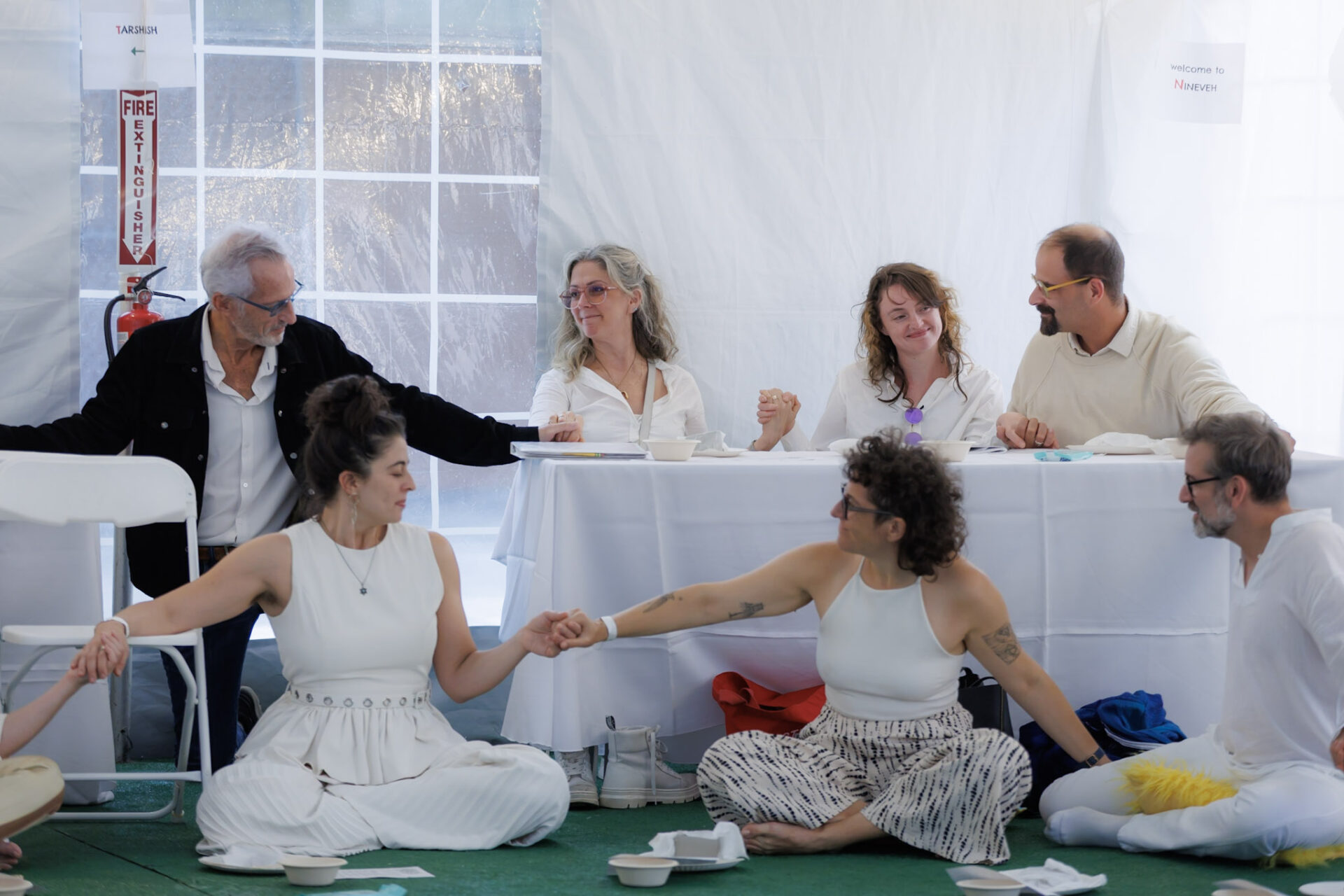
It is on us to turn from rage, revenge, and righteous hurt toward compassion, empathy, and the wisdom of the dance. During these days, I hope we reach out, hand in hand, and rise despite the fear to lift each other up. Let us move from grief to growth, co-creating a brand-new story of hope that one day, when we are ancestors, we will be proud to hand down.
I will be marking this Yom Ha’atzmaut today with my mother and family, celebrating my birthday with the customary two-tier chocolate cake, and praying for peace with all my heart—grateful for each moment of life and love.
Dance on, friends. May these days bring us joy, hope, pride, and purpose. May we be part of the peace so urgently needed all over the world and in this holy land.
May we dance in joy. I hope to see you soon—in peace,
Rabbi Amichai