CHILDREN OF AFRICA, CHILDREN OF ABRAHAM –
Reflections on Black History Month
By: Jesi Kelley
On February 7, 1926, Dr. Carter G. Woodson launched the first Negro History Week, deliberately choosing the week to include the birthdays of Frederick Douglass and Abraham Lincoln—dates already celebrated in Black communities. Dr. Woodson’s aim was not to create a separate narrative, but to correct a distorted one. He wrote, “It is not so much a Negro History Week as it is a History Week… We should emphasize …the Negro in History.” A lifelong historian, he envisioned a world history free of national bias, race hatred, and religious prejudice.
Woodson’s determination was sharpened during his doctoral studies at Harvard University, only the second Black American of his era to earn a PhD. While completing his dissertation under Edward Channing and Albert Bushnell Hart, he faced open racism. Channing declared that “the Negro had no history” and dismissed the significance of Crispus Attucks in the Boston Massacre. Such claims strengthened Woodson’s determination to document and teach the depth of Black contributions to American and global life.
Black history is American history.
While researching the origins of Black History Month, I discovered that Woodson’s life overlapped with that of my maternal great-grandfather, Truman K. Gibson, Sr. Both attended Harvard—my great-grandfather graduating in 1908, Woodson earning his PhD in 1912—and both were protégés of W. E. B. Du Bois. After Harvard, my great-grandfather and a Black classmate named Hugh MacBeth Sr. attempted to launch a Black history lecture bureau. The venture failed; MacBeth moved to Los Angeles to practice law, later advocating for Japanese Americans incarcerated under Executive Order 9066. My great-grandfather became President and Chairman of Supreme Life Insurance, one of the largest Black-owned businesses in the northern United States at the time.
Black history is family history.
And what do we see when we study Black people in Jewish history? Our histories have intersected for millennia beginning with Moses marrying a woman from Kush; to 1492, when Spain expelled Jews in March after forcing out Northern Africans earlier that year. That August, Christopher Columbus sailed west with 90 men, including interpreter Luis de Torres—born Yosef ben Ha Levy Haifri—along with Juan Moreno and the Niño brothers, free men of African descent who served as navigators. (Note: Interesting backstory is that de Torres was chosen because he spoke Arabic, Hebrew and Spanish, and Columbus expected to encounter those languages).
During the ensuing Transatlantic Slave Trade, an estimated 12 million Africans were forcibly transported. In the late 1400s and 1500s, some Jews traveled to the Caribbean as merchants and plantation owners, establishing businesses and sugar estates. In 1654, Jews arrived in North America, settling first in New York and later in Newport, Philadelphia, Charleston, and Savannah. (My paternal great-great-grandfather, likely a converso, arrived in Savannah in the mid 1800s.) In the early 20th century, Jewish immigrants from Europe formed alliances with African Americans in the entertainment industry. Abel Meeropol wrote the poem “Strange Fruit,” later set to music and immortalized by Billie Holiday. When Holiday’s producer, John Hammond, refused to record it, her friend Milt Gabler stepped in. The song became the biggest-selling record of Holiday’s career and was considered the first significant anthem of the civil rights movement.
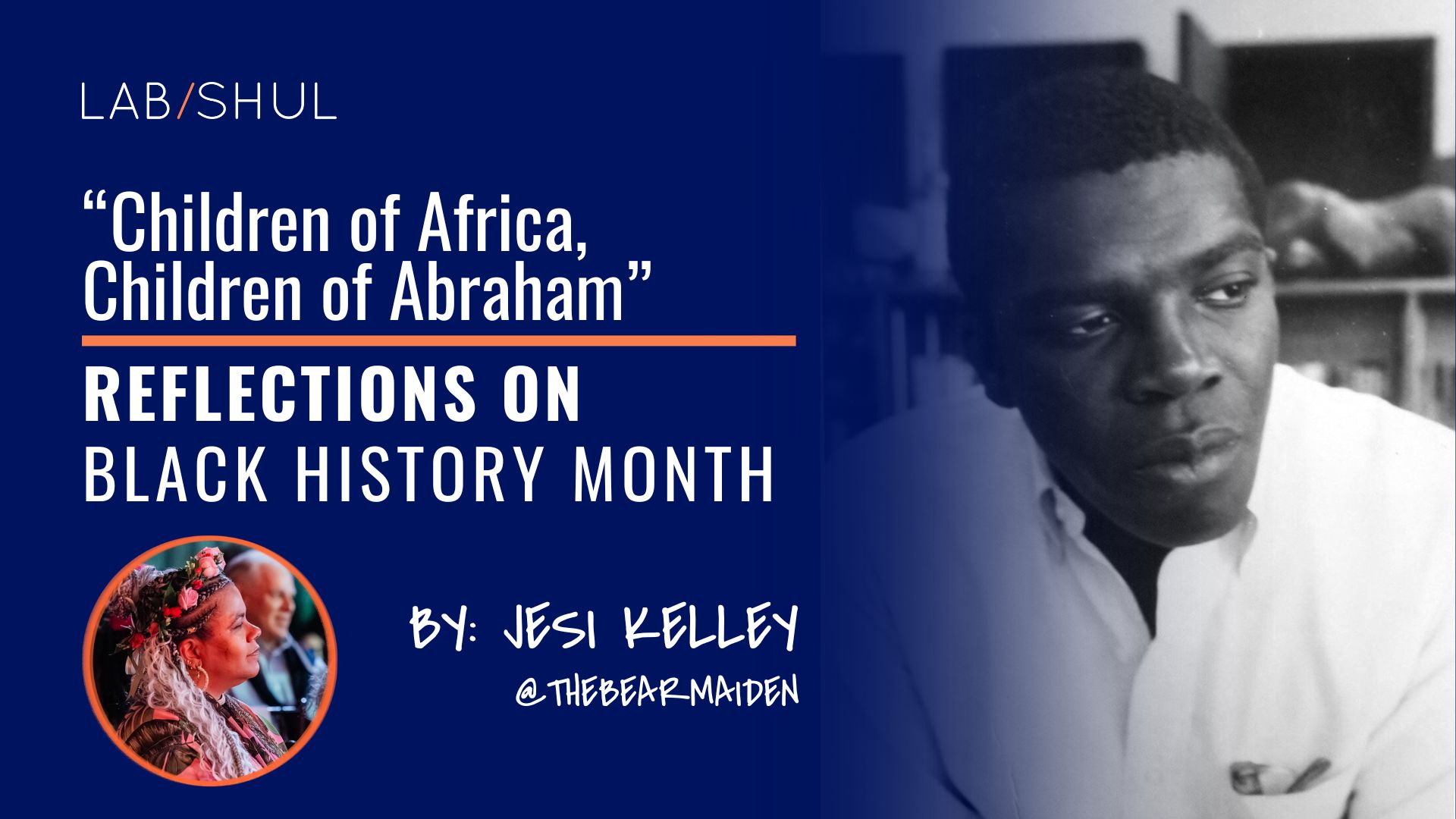
It is widely known that Jewish students and rabbis played significant roles in the Civil Rights movement. Less known is that a key leader—the chairman of the Student Nonviolent Coordinating Committee (SNCC)—was both Black and Jewish.
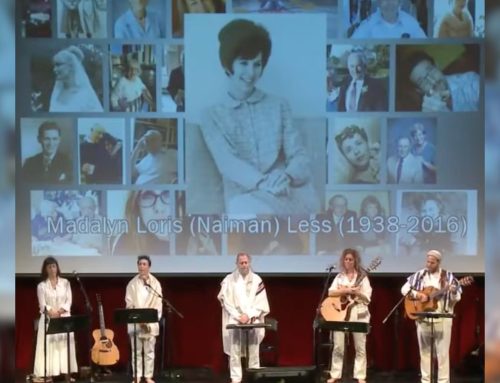
Charles Frederick McDew was born in Massillon, Ohio, on June 23, 1938. Raised close to his Jehovah’s Witness grandparents in a relatively integrated setting, he nonetheless observed that most churches were segregated. At 14, McDew converted to Judaism, drawn in part to the concept of Tzedek—justice. He often cited the Talmudic teaching: “If I am not for myself, who will be for me? If I am for myself only, what am I? If not now, when?” Throughout his life, he studied with rabbis in Chicago, the Bay Area, and Atlanta.
Black history is Jewish history.
McDew wrote that he felt more welcome in synagogue than in many other white spaces. During a religious emphasis week at South Carolina State University where he was a student, several white preachers urged him to embrace their beliefs but would not welcome him as a member. When he asked a visiting rabbi if he would be welcome in synagogue, the rabbi answered honestly: he could attend, but would likely be arrested; the rabbi might lose his job; the congregation would not support him. Still, he said, McDew was welcome to worship.
How did Jewish congregants, amid the Civil Rights movement and after centuries of intertwined histories between the children of Africa and the children of Abraham, fail to welcome a Black man devoted to justice? “It’s complicated” is an easy answer, but insufficient. As a Black and Jewish person, I wrestle with anger and hurt that a faith I love resists the deep self-reflection required to answer this question honestly.
That is why I was grateful, through Lab/Shul’s Racial Equity and Action Delegation (READ), to participate in Kirva’s course, Dismantling Racism from the Inside Out (DRIO). The course uses the tools of Mussar—Jewish ethical practice—to confront and heal implicit and internalized racism. After my first cohort, Lab/Shul partner Joan Beard and I chose to re-enroll in order to internalize the learning more deeply.
Joan and I are also members of the Racial Justice Group (RJG); a small multi-racial group based in North Carolina that that has met weekly for four years. During honest, sometimes painful conversations we examine race within Jewish life. Our discussions have been so insightful that we built a shared resource database to capture and organize what we study. We are grateful that Lab/Shul is now hosting RJG within the current DRIO cohort.
As I wrote this, news broke that Jesse Jackson had passed away, and old wounds regarding antisemitic comments he made in the 1980s—later renounced—resurfaced. But as Black History Month draws to a close, my hope is that we continue exploring the ways Black and Jewish histories have converged, rather than allowing the world to pull us apart.
Black is history is everyone’s history.
***
Interested in the next cohort of DRIO? Contact [email protected]